Spark Novus | Marketing AI Strategy and Execution

Enabling Marketing Teams to Unlock AI for Impact.
STRATEGY. IMPLEMENTATION. TRAINING.
AI is already part of the marketing operating model.
Teams that harness it now gain momentum. Put it to work today.

MARKETING AI KickstarT Program
A focused 90-day program that puts strategy into motion by assessing capabilities, selecting high-value use cases, enabling teams, running quick-win pilots, and building momentum with practical guardrails.

Marketing Ai Strategy blueprint development
A focused 30-day engagement working closely with the CMO or senior marketing leader to define priorities, success measures, governance, and a clear execution roadmap for how AI should be integrated across marketing.

MARKETING AI Training & Enablement
A customized program that delivers role-based AI training tailored to each marketing function, accounting for geography, team size, current skill level, and the existing martech stack, enabling consistent and practical use of AI.

Inspire action
Invite us to deliver a keynote that inspires your team to think bigger about AI. Each session blends storytelling and practical insight so teams leave aligned, motivated, and ready to apply AI.
Better together
Join the Marketing AI Pulse community, where marketers connect, learn, and grow at the intersection of AI and marketing through hands-on sessions and collaborative discussions.

Thinking aloud
The Marketing AI SparkCast is the podcast where marketers tune in to understand how AI is reshaping the world of marketing, with interviews and real stories that translate ideas into practice.

informed perspectives
Understand the AI-driven shifts shaping marketing before they shape you and your organization, with select events, resources, and perspectives from Spark Novus delivered via email.
Thought Leadership for Modern Marketers

On The Marketing AI SparkCast, Palmer Houchins, Vice President of Marketing at G2, examines how AI is reshaping marketing work and the MarTech landscape. This piece explores how AI is transforming internal marketing workflows, influencing MarTech investment decisions, and changing how vendors are surfaced and evaluated in generative environments, and outlines what coordinated leadership response requires from CMOs navigating this structural shift.

Regulatory signals from New York and the FTC are reshaping how AI in Marketing is governed. CMOs now face direct accountability for how AI shows up in advertising, personalization, and customer engagement. Marketing specific AI governance is no longer optional. It is a leadership imperative.

The Super Bowl doesn’t just showcase ads. It exposes how CMOs are making decisions about AI, brand, and leadership in public. As AI becomes more visible in marketing, the real differentiator is no longer the technology itself, but the judgment behind it. This piece explores what AI made Super Bowl ads reveal about brand alignment, human oversight, and the leadership choices CMOs are already making, intentionally or not.

In this podcast episode of the Marketing AI Pulse Monthly Brief, Aby Varma and Matt Cyr break down the top 10 shifts CMOs and marketing leaders must prepare for in 2026 and beyond. Moving past hype, the conversation explores how AI is reshaping agencies, brand discovery, creative, media, analytics, and leadership itself. The episode offers a clear-eyed look at what is already changing and where human judgment, governance, and decision quality will matter most.
As AI took center stage at Davos, the conversation shifted from hype to execution. Leaders focused on results, operating models, workforce readiness, and human accountability as prerequisites for value. For CMOs and marketing leaders, the message was clear: AI success now depends on disciplined execution, not experimentation.

Lean marketing teams are expected to deliver more without additional headcount. This blog explores how AI can help when applied with clarity and intent. It covers practical ways AI supports marketing writing, creative production, email, video, and automation, while highlighting why defined ICPs, real customer pain points, and thoughtful workflows matter. The focus is not on chasing tools, but on using AI to improve execution, reduce friction, maintain quality, and support sustainable marketing operations over time.

As AI platforms like ChatGPT begin testing in-app advertising, CMOs face a critical new frontier in brand visibility and trust. This blog breaks down what’s changing, how major AI platforms are approaching ads, and what steps marketers must take to stay relevant in AI-driven discovery. With search, social, and display giving way to conversational intent, it’s time to reframe your strategy for the age of AI-powered attention. Relevance, not reach, now wins.

Many AI initiatives stall because they are treated as tools rather than leadership commitments. This article outlines the AI resolutions CMOs should commit to this year to move beyond pilots and experimentation. It focuses on clarity before capability, disciplined prioritization, governance that enables speed, role-based enablement, and fixing operational friction. The goal is to help marketing leaders embed AI into everyday workflows with confidence, reduce adoption anxiety, and deliver measurable business impact.

Many CMOs recognize the importance of AI but struggle to turn adoption into meaningful impact. The issue is rarely technology. It is how AI is framed, led, and embedded into marketing operations. This piece outlines five leadership mistakes that quietly derail AI adoption, from treating AI as a tool rollout to expecting ROI without changing workflows, and explains what successful CMOs do differently to make AI a durable marketing capability across teams and decision making.
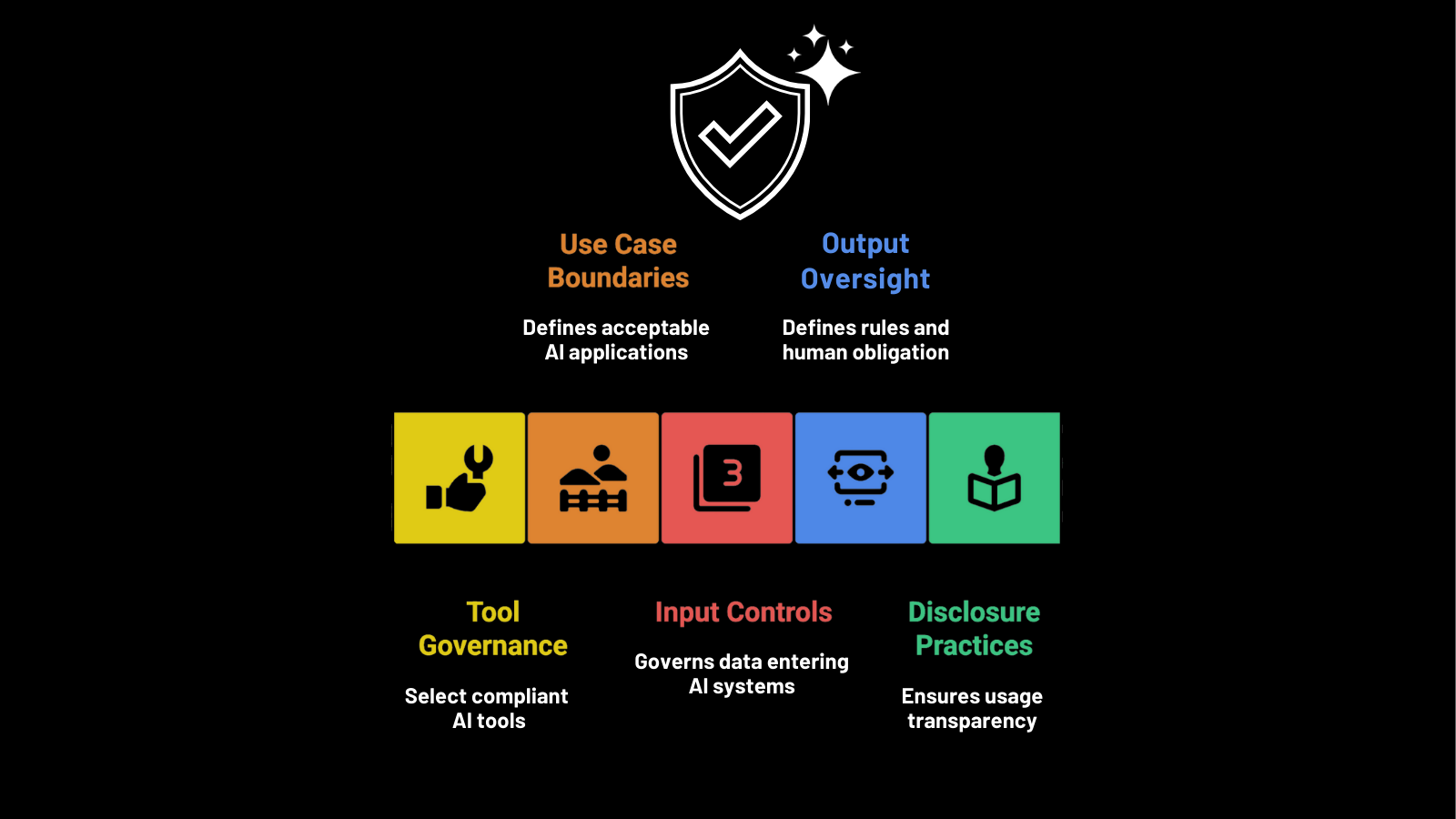
Governance is the foundation that enables responsible AI use in marketing. It protects brand trust while giving teams clarity about what is allowed and how to move forward with confidence. This post explains why CMOs must own AI governance, how a marketing governance council operates, and the five pillars that ensure AI tools, use cases, inputs, outputs, and disclosures are managed responsibly and at scale.
Frequently Asked Questions
-
Spark Novus helps marketing teams adopt and integrate AI strategically and responsibly to drive measurable marketing impact. The work focuses on helping teams move from fragmented AI experimentation to clear priorities, structured pilots, and repeatable ways of applying AI across marketing.
-
Spark Novus works with CMOs and senior marketing leaders who are accountable for marketing outcomes and are looking for help leveraging AI to achieve measurable results. These teams are often scaling quickly and navigating pressure to modernize marketing while maintaining quality, consistency, and trust.
-
Spark Novus helps marketing teams define how AI supports modern marketing across strategy, discovery, content, and execution. This includes aligning AI initiatives to business priorities, improving brand and content clarity for AI driven discovery through Generative Engine Optimization, strengthening content strategies with AI support, and designing AI workflows, automation, and orchestration that scale marketing programs without overwhelming teams.
-
Spark Novus is not a traditional marketing agency or a general AI consultancy. Spark Novus works alongside marketing leaders as a strategic and enablement partner, helping teams define how AI fits into the marketing organization before scaling execution.
-
Spark Novus delivers hands on AI training and enablement designed specifically for marketing teams. The focus is on building confidence, strengthening judgment, and helping teams apply AI responsibly in real marketing scenarios rather than isolated experimentation.
-
Yes. Spark Novus designs and runs structured AI pilots with clear success metrics. These pilots help teams validate value, build internal confidence, and reduce risk before scaling AI across the marketing organization.