Get the Marketing AI Governance Blueprint: Guardrails, Reviews & Disclosure | Spark Novus - AI Consulting, Training, and Implementation Services for CMOs and Marketing Leaders

The Blueprint Marketing Leaders Need to Apply AI with Confidence
Why Marketing Needs its own Governance
Marketing teams are moving fast with AI, but speed without governance creates fragmentation, wasted spend, and brand risk.
A company-wide AI policy helps, but it often misses what marketing needs day to day:
Work moves in weeks, not quarters
Agencies, freelancers, and platforms are part of execution
Creative output is high-volume and constantly iterated
AI reaches customers directly through ads, web, email, and personalization
Teams need clear answers when a new tool is introduced or synthetic content appears
Governance is not red tape. Governance is guardrails that let teams scale AI with confidence:
Clear decision rights and approvals
Practical rules for tools, vendors, and partners
Data and brand protections that work at campaign speed
Consistent review and transparency expectations

Regulatory signals from New York and the FTC are reshaping how AI in Marketing is governed. CMOs now face direct accountability for how AI shows up in advertising, personalization, and customer engagement. Marketing specific AI governance is no longer optional. It is a leadership imperative.
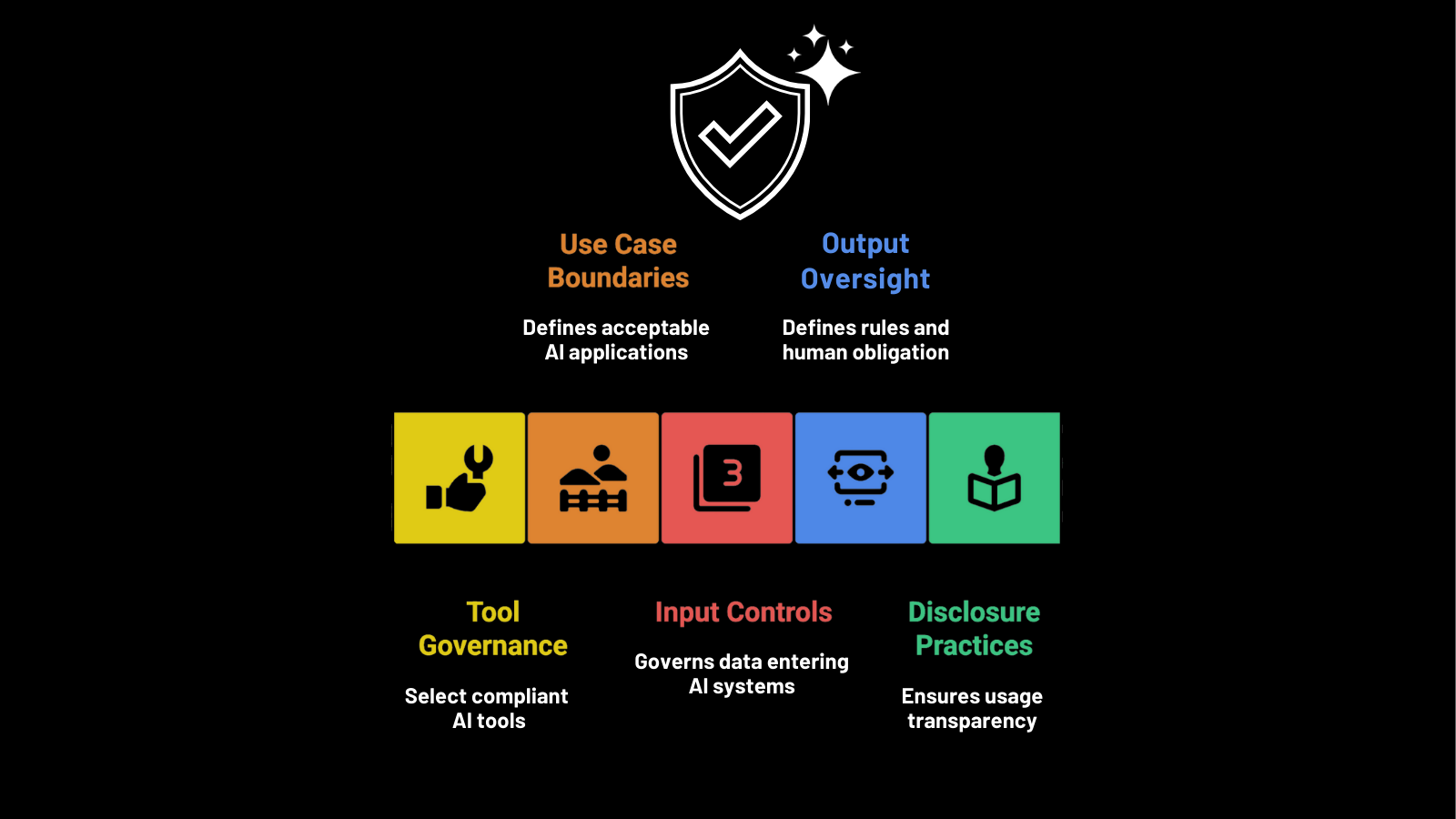
Governance is the foundation that enables responsible AI use in marketing. It protects brand trust while giving teams clarity about what is allowed and how to move forward with confidence. This post explains why CMOs must own AI governance, how a marketing governance council operates, and the five pillars that ensure AI tools, use cases, inputs, outputs, and disclosures are managed responsibly and at scale.
How the Marketing AI Governance Blueprint Works
Built for marketing teams, this blueprint is typically completed in 60 to 90 days, depending on stakeholder alignment, partners, and current AI usage.
Align on goals and guardrails: We start with a focused working session to define what marketing is trying to achieve with AI, for example faster blog and email production, more ad variations, quicker social content, or better campaign reporting, and where you want clearer guardrails, for example testimonials, spokesperson-style creative, and anything customer-facing that could be misunderstood.
Assess the current state: We run lightweight discovery to understand what is already happening, for example which teams are using ChatGPT-like tools for copy, which platforms have AI features turned on in ads or email, how agencies are generating creative, and what information people are pasting into tools, including whether customer data or internal plans are slipping into prompts.
Define how decisions get made: We document a simple governance structure for marketing, including who participates, what gets reviewed, how decisions get made, and how often standards get updated, for example a small Marketing AI Council that can approve tools, set allowed uses, and keep rules current as teams move fast.
Clarify ownership and approvals: We define who approves what, for example who can greenlight a new AI tool, who signs off on AI-assisted ad copy and landing pages, and who owns final review when an agency delivers AI-generated creative.
Write the standards teams can follow: We define practical standards marketing can actually use, for example an approved tool list, clear do and do not guidelines for content creation, simple rules on what can never go into prompts like customer PII, and when human review is required before anything is published.
Pressure-test against real workflows: We validate the blueprint against real marketing work, for example weekly campaign launches, agency handoffs, last-minute copy changes, localization, and always-on paid social, so governance holds up without slowing execution.
Deliver the blueprint: You get usable decision flows and checklists, for example how to request a new tool, how to approve a new AI use, when to escalate for review, and how to keep training and updates current so the rules stay alive, not forgotten.
Note: Spark Novus does not provide legal services. We collaborate with your legal and compliance teams, or partner with qualified firms if outside counsel is needed.
Ready to scale AI in marketing with guardrails that protect brand trust?
The Marketing AI Governance Blueprint gives you clear decision rights, partner standards, review expectations, and responsible-use guardrails so marketing can move fast without losing control. If this resonates with you, reach out to set up a quick conversation.
Key Governance Practice EXAMPLES for Responsible Marketing AI Adoption
Vendor and Tool Approval: Clear standards for evaluating and approving AI vendors so marketing doesn’t introduce risk into the enterprise tech stack.
Data and IP Protection: Policies that ensure sensitive data and brand assets are safeguarded when used in AI systems.
Human Oversight and Review: Requirements that AI-generated outputs are always checked by people before reaching customers.
Transparency and Disclosure: Practices that build customer trust by clarifying when and how AI is used in marketing.
AI use case control: A repeatable method to qualify, prioritize, approve, and measure AI initiatives so pilots can scale into durable capability.
What Marketing Leaders Gain from a Governance Blueprint
This blueprint is designed to move you from fragmented AI adoption in marketing to confident, scalable execution. Outcomes include:
Clear CMO-level ownership and decision rights for how AI is used in marketing, so it is governed, not improvised.
Faster, higher-confidence decisions on which AI investments belong in the marketing roadmap and which should be stopped.
Consistent guardrails that protect brand trust, reputation, and customer relationships as AI becomes embedded across marketing.
Shared standards for marketing teams and partners so AI use is consistent across campaigns, channels, and regions.
A practical review and accountability approach for high-visibility marketing outputs and higher-risk AI use, without slowing the business.
Stronger stakeholder confidence through documented marketing standards, training, and evidence of responsible AI adoption.
Questions the Marketing AI Governance Blueprint helps your team answer
How do we decide which AI uses are low risk versus high risk?
What AI tools should be approved versus blocked for marketing teams?
What customer data can and cannot be used with AI tools?
How do we handle agencies and freelancers using their own AI tools?
How do we protect brand voice and creative quality with AI content?
What should require human review before anything goes live?
Who should own marketing AI governance internally?
How does governance help AI scale across channels?
Do we need to disclose AI-generated content in marketing?
Frequently Asked Questions
-
Marketing AI governance is a set of practical rules and responsibilities that guide how AI is used in marketing. It clarifies who can use which tools, what data is allowed, what needs human review, and what must be disclosed so AI use stays consistent and trustworthy.
-
CMOs need it because marketing teams move fast, work with outside partners, and publish customer-facing content daily. A general policy rarely answers real workflow questions like tool approval, use of customer data in AI, review requirements, and how to handle synthetic or AI-generated elements in campaigns.
-
The blueprint focuses on creating a marketing governance body and the key governance practices it oversees. Those practices include vendor and tool approval standards, data and IP protection policies, human oversight and review requirements, and transparency and disclosure practices for how AI is used in marketing.
-
Marketing establishes a governance body such as a Marketing AI Council, Steering Committee, or Oversight Group to set direction, approve priorities, and oversee responsible adoption inside the function. The blueprint also defines how marketing collaborates with legal, compliance, and IT so risks are managed appropriately while marketing retains ownership of adoption and use cases.
-
Marketing AI governance gives CMOs a single, consistent set of guardrails for how marketing uses AI across the function. It reduces uncertainty, prevents inconsistent decisions, and creates clear accountability so teams can move faster with confidence while protecting brand trust, data stewardship, and marketing credibility.
-
Most organizations complete the blueprint in 60 to 90 days on average. The timeline depends on how many teams and partners are involved, how quickly stakeholders can align on decision rights, and how much existing policy and tooling you already have in place.